완전한 공부 플랫폼

한 학기를 한곳에서.

수업 자료나 주제를 바탕으로 수업, 플래시카드, 연습 문제를 만들어 보세요. 공부 시간을 계획하고, 에세이를 쓰고, 발표 자료까지 한곳에서 만들 수 있습니다.

무료로 공부 시작하기

iPhone, iPad, Android에서도 사용할 수 있습니다. App Store · Google Play

다음 기관의 학생들이 신뢰합니다

Algonquin CollegeUniversity of OttawaCarleton UniversityUniversity of CalgaryUniversity of ManitobaHerzing CollegeLa CitéWillis College
4.6 Trustpilot 기준

사용 방법

다음 시험을 위한 공부 플래너.

01

학습 자료 추가

자료를 업로드하고 공부할 페이지를 선택하세요.

02

공부할 시간을 알려 주세요

공부할 수 있는 날짜와 끝내고 싶은 날짜를 선택하세요.

03

계획대로 따라가기

Tandral이 마감일까지 따라갈 수 있는 하루 단위 공부 계획을 만들어 줍니다.

휴대폰으로

하루가 닿는 어디서든 공부하세요.

하나의 계정으로 iPhone, iPad, Android에서 모두 사용하세요. 이 페이지의 모든 내용이 주머니에 들어갑니다.

9:41
팟캐스트18분

혈당 조절

Alex와 Sam · 내분비계

2:1418:02
1515
대본
Alex그럼 인슐린과 글루카곤은 정반대 역할을 하네요. 왜 숫자 하나에 호르몬이 두 개나 필요할까요?
Sam수치를 낮추는 문제와 다시 올리는 문제는 서로 다르기 때문이죠.
9:4111월 12일 화요일
혈당 조절Tandral · 팟캐스트
버스에서 듣는 팟캐스트
9:41
심혈관계7 / 24
문제

어느 심장방이 대동맥으로 혈액을 내보내나요?

눌러 뒤집기
정답

왼심실은 네 개 중 벽이 가장 두껍습니다.

틀렸어요맞혔어요
홈채팅노트캘린더
줄 서서 보는 카드 몇 장
9:41
내분비계3 / 10

문항 3 · OX 퀴즈

인슐린은 혈당을 높인다.

OX
다음 문제
홈채팅노트캘린더
잠들기 전 퀴즈

공부 도구

공부하는 모든 방법을 한곳에.

같은 자료를 읽는 12가지 도구로, 형식을 바꿔도 처음부터 다시 시작할 필요가 없습니다.

수업

자료로 만드는 수업입니다. 한 챕터씩 진행되고, 각 수업 뒤에 퀴즈가 있습니다.

플래시카드

수업 자료로 카드를 만들거나 직접 작성하세요.

연습

한 번에 하나씩, 단계별로 풀고 각 단계마다 피드백을 받으세요.

테스트

퀴즈나 시간 제한 연습시험으로 실력을 점검하고 답안에 대한 피드백을 받으세요.

마인드맵

내 자료로 만든 개념도, 또는 직접 그린 맵.

동영상 강의

수업 자료를 음성 설명과 자막이 있는 동영상 수업으로 바꾸세요.

요약

자세한 요약이나 핵심 포인트만 담은 짧은 버전으로 받아보세요.

오디오

팟캐스트를 듣고, 소리 내어 질문에 답하고, 주제를 토론하거나 다시 설명해 보세요.

에세이

에세이를 계획하고, 표현을 다듬고, 쓰는 동안 인용을 추가하세요.

채팅

자료에 무엇이든 물어보세요. 답변은 내 페이지에서 가져옵니다.

프레젠테이션

전체 편집기가 있는 슬라이드 제작. PowerPoint로 내보낼 수 있습니다.

공부 플래너

자료와 공부 날짜를 바탕으로 매일의 공부 일정을 받아보세요.

배우기

챕터별로 차근차근 배우세요.

Tandral이 선택한 페이지를 읽고 학습 계획을 만듭니다. 수정하고, 순서를 바꾸고, 다시 생성할 수 있는 챕터들로 구성되며, 각 챕터를 명확한 가이드형 수업으로 알려줍니다. 마지막에는 퀴즈가 있어 제대로 이해했는지 확인할 수 있습니다.

  • 내가 직접 조절하는 학습 계획. 시작하기 전에 챕터 구성을 보고 수정하거나, 주제를 추가하거나, 다시 생성할 수 있습니다.
  • 핵심에 집중. 한 주제에 맞춰 수업을 진행하거나, 가장 오래 보고 싶은 부분을 지정하세요.
  • 모든 수업 뒤에 퀴즈. 짧은 질문 몇 개로, 챕터를 읽고도 헷갈리는 일이 없도록 합니다.

4장 · 신경계

약 6분 읽기

신경계는 정보를 캠퍼스가 학생을 이동시키는 방식처럼 옮깁니다. 정해진 경로를 따라, 우선 차선 을 두고 움직이죠. 모든 신호는 뉴런 이라는 세포를 지나며, 시냅스라는 작은 틈 을 건너 다음 세포로 전달됩니다.
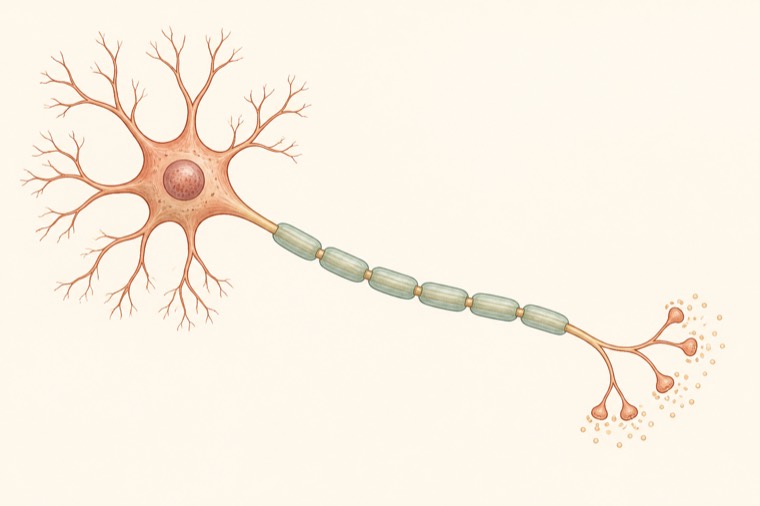
그림 4.1 · 뉴런 하나, 전체 구조

수초초 으로 둘러싸인 축삭은 수초가 없는 축삭보다 최대 30배 더 빠르게 신호를 전달합니다. 이 수초가 손상되면 신호가 느려지거나 멈춥니다 그래서 84쪽의 도표가 꼭 알아둘 내용이 됩니다.

메모

매년 이 내용이 나온다고 했어요. 세포 이름보다 틈의 이름을 말하래요.

신호는 충분히 많이 한꺼번에 도달해야만 틈을 넘어갑니다. 그 기준보다 적으면 아무 일도 일어나지 않아서, 이 반응을 전부 아니면 전무 라고 부릅니다.

짧은 퀴즈

1. 손상된 수초초는 신호를 더 빠르게 만든다.

2. 다음 중 축삭을 따라 신호를 더 빠르게 하는 것은 무엇인가요?

단계별 연습

한 문제, 한 단계씩.

수학, 화학, 물리, 코딩 문제를 단계별로 풀어 보세요. 진행하면서 각 단계마다 피드백을 받을 수 있습니다.

  • 내 방식대로 답하기. 입력하고, 그리고, 수식을 쓰고, 코딩하세요.
  • 결과만이 아니라 단계별 피드백. 어디서 틀렸는지, 왜 틀렸는지 알 수 있습니다.
  • 막혀도 괜찮아요. 예시를 보거나 설명을 요청하세요.

직각삼각형의 두 변이 3cm와 4cm입니다. 빗변의 길이는 얼마인가요?

1. 세 변을 연결하는 관계는 무엇인가요?

예시

5-12-13 삼각형에서는 5² + 12² = 13²

수학

a² + b² = c²

아직 아닙니다. 먼저 두 변을 제곱하세요. 3과 4가 아니라 3²와 4²입니다.

a² + b² = c²

2. 두 변의 길이를 넣어 보세요.

예시

변이 5와 12이면: 5² + 12² = 13²

수학

3² + 4² = c²

아직 아닙니다. 먼저 두 변을 제곱하세요. 3과 4가 아니라 3²와 4²입니다.

3² + 4² = c²

3. 그려 보고 빗변에 표시해 보세요.

예시

빗변은 직각의 맞은편에 있는 변입니다.

그리기
아직 아닙니다. 먼저 두 변을 제곱하세요. 3과 4가 아니라 3²와 4²입니다.

직접 풀어보기

퀴즈와 모의고사로 대비하세요.

수업 내용을 직접 풀어보세요. 퀴즈나 시간 제한이 있는 모의고사를 선택하고 답안 피드백을 받아보세요.

O/X객관식단일 선택단답형서술형문제 해결사례 분석등

내분비계 · 결과
7/10
Q3 · O/X

인슐린은 혈액 속 포도당 농도를 높인다.

내 답: 맞다 · 정답: 아니다

Q6 · 단답형

식사 사이에 혈당을 높이는 호르몬은 무엇인가요?

내 답: 인슐린 · 정답: 글루카곤

Q9 · 객관식

췌장의 어느 부위에서 인슐린이 만들어지나요?

내 답: 알파 세포 · 정답: 베타 세포

틀린 부분 다시 보기

틀린 내용이 다음 학습이 됩니다.

퀴즈 결과를 바탕으로 놓친 주제의 수업, 플래시카드, 연습 문제를 바로 시작해 보세요. 그런 다음 다시 직접 풀어보세요.

영상수업플래시카드연습다시 직접 풀어보기

틀린 답을 바탕으로 만든 학습 내용10개 중 3개
Q3 · 인슐린과 포도당Q6 · 혈당을 올리는 호르몬Q9 · 인슐린이 만들어지는 곳
수업준비됨 · 6분
두 호르몬, 하나의 수치0:00 / 4:12
영상준비됨 · 4분
Q식사 사이에 혈당을 올리는 호르몬은 무엇인가요?
플래시카드 12장준비됨
두 호르몬의 이름을 쓰세요2각각의 역할을 쓰세요3여기서 빠진 것은 무엇인가요?
연습 문제 3개준비됨

함께 공부

영상 통화로 함께 공부하세요.

한 통화에 최대 4명까지 참여할 수 있어요. 수업, 퀴즈, 카드 덱을 함께 띄워 놓고 같이 풀어보세요.

화상 통화 중인 네 명의 학생이 보입니다. 옆의 채팅에는 한 학생이 수업을, 다른 학생이 플래시카드 덱을 공유하고 있고, 당신은 퀴즈를 공유한 상태이며 점수가 표시됩니다.

오디오 학습

수업을 듣고, 질문에 소리 내어 답하세요.

팟캐스트

두 진행자가 수업 내용을 풀어서 설명하는 걸 들어보세요.

AlexWelcome back. Today we’re talking about patient rights, the responsibilities that come with them, and some important issues involving privacy and health information.
SamI know the phrase patient rights, but I sometimes think of rights as just a list of things patients are allowed to ask for. Is there more to it?
AlexYes. A right is a claim or privilege that a person is legally or morally entitled to. Legal rights are written into laws, such as the Canadian Charter of Rights and Freedoms and the Canada Health Act. Courts can enforce those rights.
SamAnd moral rights are different because they may not always be written in legislation?
AlexExactly. Moral rights are based on accepted social values and professional codes of ethics. For example, treating a patient with dignity is both an ethical expectation and, in some situations, a legal responsibility. A regulatory body, such as the College of Nurses of Ontario, may respond if a breach causes harm.
SamYou mentioned that rights come with obligations. What does that mean for nurses?
AlexIt means every right creates a corresponding responsibility. If patients have a right to privacy, nurses have a duty to protect their personal information. If patients have a right to understandable information, nurses have a responsibility to communicate clearly and support learning.
SamSo patient rights are not just ideas. They guide what health professionals must do.
AlexThat’s right. Major patient rights include respect and dignity, access to health information, confidentiality and privacy, safe care, discharge decisions, protection for vulnerable people, and informed consent.
SamLet’s start with respect and dignity. What does that look like in everyday nursing practice?
AlexIt means treating every person as worthy of respect, regardless of their illness, background, identity, or choices. A useful principle is: treat others as you would want to be treated. Nurses show respect through honesty, active listening, professionalism, confidentiality, and privacy.
SamDoes equal access fit under respect and dignity too?
AlexYes. Everyone should have equal access to health services and treatment. Respect also includes personal privacy. During an assessment, bath, examination, or procedure, the patient should be covered as much as possible and exposed only when necessary.
SamWhat about other people in the room, like students or visitors?
AlexUnauthorized people should not observe the patient’s care. And photographs must not be taken without permission, even if someone says the picture is for education. Educational purposes do not cancel the patient’s right to privacy.
SamThat seems like an important distinction. A clinical setting does not automatically mean everyone can see or record what happens.
AlexExactly. Privacy must be actively protected, not assumed.
SamWhat does access to health information involve?
AlexPatients have the right to access information in their health records and, when appropriate, request corrections or amendments. That can include their chart, test results, and bloodwork. Agencies and legislation guide the exact process.
SamSo patients may be able to view their information through an online portal, such as MyChart?
AlexYes. Many organizations provide secure online access. Nurses also have an educational role. They help patients and family members develop the knowledge and skills needed to care for themselves and to access the health-care system when help is needed.
SamI noticed an interesting question: does a patient have the right to receive a diagnosis from a nurse?
AlexPatients have a right to information about their health, but health professionals must communicate within their role and competence. A nurse should not interpret or disclose a diagnosis outside their scope or before the appropriate provider has explained it.
SamSo if a patient asks, ‘What did my scan show? Is my cancer back?’ the nurse should not guess or casually interpret the result.
AlexCorrect. The nurse can acknowledge the concern, explain what they can and cannot discuss, and connect the patient with the authorized health professional. For example: ‘I understand you’re worried. The provider will review the results with you, and I can help make sure you speak with them.’
SamThat protects the patient from receiving incomplete or inaccurate information.
AlexExactly. Access to information should be accurate, timely, understandable, and provided through the proper channels.
SamNow let’s connect this to confidentiality and privacy. Are those the same thing?
AlexThey are closely related, but not identical. Privacy is a person’s right to control access to themselves and their personal information. Confidentiality is the health professional’s duty to protect information learned while providing care.
SamWhat law governs this in Ontario?
AlexThe Personal Health Information Protection Act, commonly called PHIPA, enacted in 2004. It governs how personal health information is collected, stored, used, disclosed, retained, and disposed of in Ontario.
SamWhen we say the information belongs to the client but is housed by the facility, what does that mean?
AlexIt means the patient is the subject and owner of the personal health information, while the hospital or clinic stores and manages the record. The facility must protect the information and use it appropriately so care can be provided safely.
SamSo PHIPA balances two needs: protecting privacy and sharing enough information for safe care.
AlexPrecisely. For example, a nurse may need to share relevant information with members of the care team. But that does not mean the nurse can discuss the patient’s condition in a hallway, post about it online, or tell a curious friend.
SamAnd patients can control their consent regarding health information?
AlexYes. Clients generally have the right to give consent, refuse consent, or withdraw consent for the collection, use, or disclosure of their personal health information, subject to legal requirements and exceptions.
SamCan you give a simple example?
AlexA patient might agree that their information can be shared with the health-care team involved in treatment. They might refuse permission to share it with a particular person. They may also withdraw permission later. Nurses must follow the law, organizational policy, and professional standards when handling that request.
SamSo the key habit is to pause before sharing information and ask: who needs to know, why do they need it, and am I authorized to share it?
AlexThat is an excellent privacy check. Also remember that privacy includes physical space, conversations, records, electronic systems, and photographs.
SamLet me summarize. Patients have legal and moral rights, and health professionals have matching responsibilities. Patients deserve respect, dignity, privacy, safe care, access to their health information, and support in making informed decisions.
AlexWell said. Remember three especially important points: first, rights are connected to professional obligations. Second, patients should be treated with equal respect and protected from unnecessary exposure. Third, health information must be handled confidentially under laws such as PHIPA.
SamAnd when a patient asks about a diagnosis, the nurse should provide accurate information within their role, avoid guessing, and connect the patient with the appropriate provider.
AlexExactly. Understanding patient rights helps nurses provide care that is safe, ethical, respectful, and legally sound.
SamThat’s a helpful framework. Thanks for making the ideas practical.
AlexYou’re welcome. Keep asking who holds the right, what responsibility follows, and how your actions protect the patient.

팟캐스트를 들으려면 소리를 켜세요.

질문해 주세요

아는 것을 확인하려고 소리 내어 답해 보세요.

TandralI read your chapter on patient rights and health information privacy. Let us see what stayed with you. First question: for a consent to be valid, what four things must be true of it?

문제를 들으려면 소리를 켜세요.

보기

내 챕터를 시각 수업으로.

내 자료를 바탕으로 한 설명을 보고 들어보세요. 자막을 따라가거나 필요한 장으로 바로 이동할 수 있습니다.
0:09 / 12:51

강의를 들으려면 소리를 켜세요.

기억하기

익힐 때까지 다시 나오는 카드.

자료로 플래시카드를 만들거나 직접 작성하세요. 색 표시로 답을 떠올리고, 틀린 카드는 반복해서 복습하세요.

  • 카드를 만드세요. 자료나 주제로 만들거나 직접 작성하세요.
  • 눈에 띄는 키워드. 색으로 구분된 용어가 기억할 포인트를 만들어 줍니다.
  • 틀린 카드를 반복하세요. 틀린 카드는 하나도 남김없이 익힐 때까지 다시 나옵니다.
문제

수초의 역할은 무엇인가요?

탭해서 뒤집기
정답

축삭을 절연해서 신호가 더 빨리 이동합니다.

탭해서 뒤집기

글쓰기

에세이를 계획하고, 작성하고, 개선하세요.

글을 쓰는 동안 개요, 표현, 인용을 도와드립니다.

  • 검증 가능한 자료. APA, MLA, Chicago 등 형식으로 연구 논문을 찾고 인용을 추가하세요.
  • 섹션별 체크리스트. 아직 덜 다룬 항목을 확인하세요.
  • 에세이를 다운로드하세요. 완성되면 Word로 내보낼 수 있습니다.

유전자 편집의 윤리

1150단어

생식세포 편집은 체세포 치료와는 다른 문제를 제기한다그 변화가 뒤따르는 모든 세대로 유전되기 때문이다. 질병을 치료하는 일과 형질을 선택하는 일의 경계는 원칙보다 정책에서 더 흐리다1그 경계의 양쪽 모두 같은 수준의 검토가 필요하며, 그 결정을 내리는 사람들은 그 결과를 살아서 겪지 않을 수도 있다.2

참고 문헌
  1. 1.Doudna, Jennifer A. 2020. “The Promise and Challenge of Therapeutic Genome Editing.” Nature 578 (7794): 229-36.
  2. 2.Baylis, Françoise. 2019. Altered Inheritance: CRISPR and the Ethics of Human Genome Editing. Cambridge, MA: Harvard University Press.

발표하기

수업 자료를 슬라이드로 바꾸세요.

자료를 바탕으로 최대 20장의 슬라이드를 만드세요. 텍스트를 수정하고, 배치를 바꾸고, 테마를 선택한 뒤 PowerPoint로 내보낼 수 있습니다.

PowerPoint 파일로 다운로드

모든 슬라이드의 테마 바꾸기

심혈관계

슬라이드 9개

발표하기

안정 시 혈액이 머무는 곳

  • 정맥
  • 동맥
  • 폐
  • 심장
9 / 9
9 / 9
PPTX심혈관계.pptx슬라이드 9개 · PowerPoint에서 열기

노트

공부하면서 손글씨 노트를 남겨보세요.

학습 그 이상

공부 시간을 계획하고 집중하세요.

할 일 및 캘린더

마감일과 긴급도("오늘", "2일 남음")가 표시된 과제, 그리고 실제 캘린더에 들어가는 계획된 세션을 한곳에서 볼 수 있습니다.

집중 타이머

공부 세션을 고르고 타이머를 시작한 뒤 집중하세요. 쉬는 시간이 되면 알림을 받습니다.

실제 학생들의 후기

학생들이 Tandral에 대해 하는 말

"예전에는 ChatGPT를 썼지만 저한테는 잘 맞지 않았어요. 그런데 Tandral을 찾고 나서 완전히 달라졌습니다."
MOMaajidah Omer간호 실무 · 알곤퀸 컬리지
"솔직히 제 삶을 구해줬어요. 저한테는 10점 만점이고, 불만이 전혀 없어요."
EEunice운동학 · 오타와 대학교
"Tandral을 쓰면 덜 압도되고 더 체계적으로 느껴져요."
BBBrandon Bukasa컴퓨터공학 · 퀘벡 오타우에 지역 대학교
"간호학과 학생으로서 시간 관리와 공부가 힘들었는데, Tandral이 그걸 바꿔줬어요."
MEMackenzie Easton간호 실무 · 알곤퀸 컬리지

자주 묻는 질문

네. 노트, 슬라이드, 읽기 자료를 추가하세요. Tandral은 선택한 자료를 바탕으로 학습 자료를 만듭니다.

네. Tandral이 대신 해 주는 것은 아닙니다. 이해에 도움이 되도록 설명, 연습, 피드백을 제공해 스스로 공부할 수 있게 준비해 줍니다.

네. 무료 학습 제공량으로 시작해 내 자료로 도구를 사용해 보세요. 신용카드는 필요 없습니다.

토큰은 학습 자료를 만들고 인터랙티브 도구를 사용하는 데 쓰입니다. 더 구매하거나 요금제를 변경할 수 있습니다. 구매한 토큰은 만료되지 않습니다. 구독은 언제든지 취소할 수 있습니다.

네. 공부하고 싶은 주제를 Tandral에 알려주세요. 그 주제를 바탕으로 수업, 플래시카드, 퀴즈 등 학습에 필요한 자료를 만들어 줍니다.

네. 휴대폰, 태블릿, 컴퓨터에서 Tandral 앱이나 웹 버전을 사용하세요. 18개 언어 중에서 선택하고 나만의 강의 자료로 공부할 수 있습니다.

다음 시험을 확실히 관리하세요.